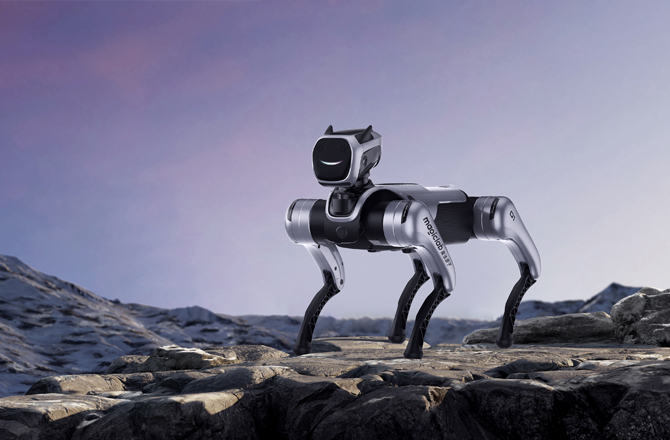
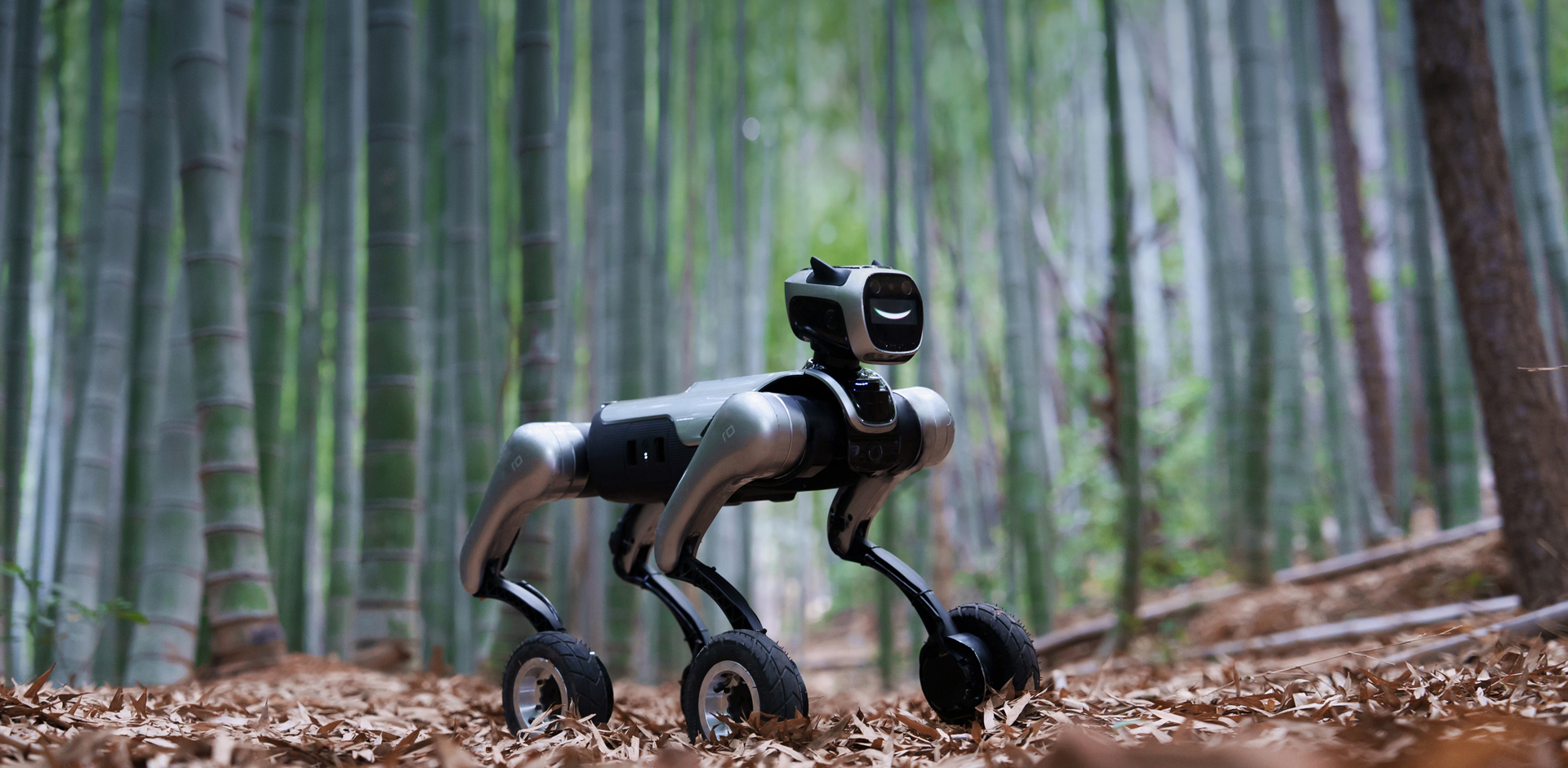

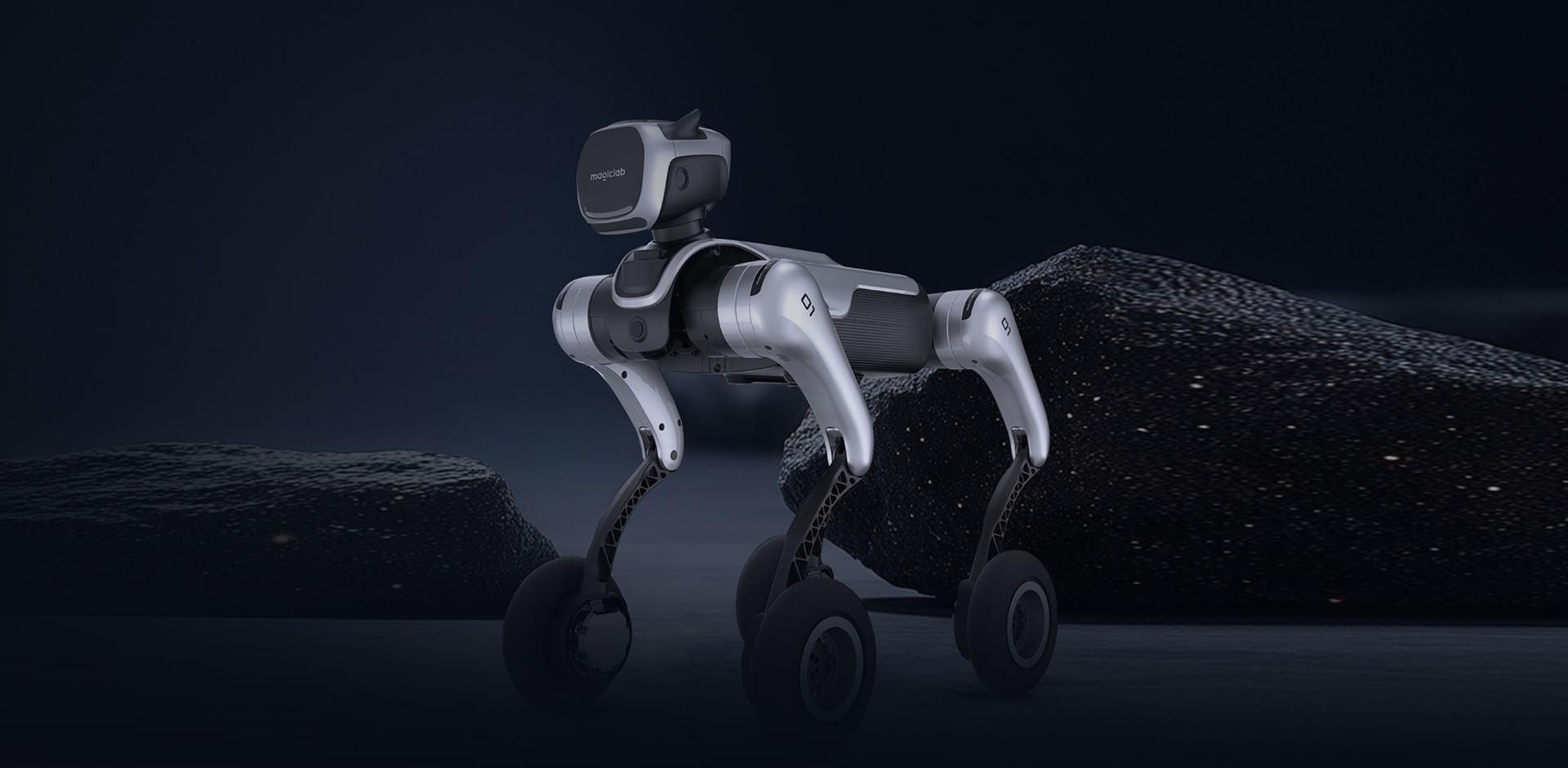
Watch MagicDog-W combine rolling speed with articulated leg movement, smoothly switching between steps, slides and dynamic postures while maintaining coordinated head-body control across changing terrain and demonstration scenarios.
| Parameter Name | Parameter Details |
Dimensions(standing) (L x W x H) | 67cm x 35cm x 65cm |
Dimensions(crouched) (L x W x H) | 72cm x 50cm x 29cm |
| Tyres | 7-inch Pneumatic Tire |
| Motors | 16+1(Head Movement) |
| Weight | 22.5kg(Including Battery) |
| Battery | Capacity: 8200mAh, Rated Voltage: 29.6V |
| Battery Life | 2-4 h of Continuous Operation |
| Payload | Up to 10kg |
| Movement Speed | ≥ 3.0m/s |
| Climbs and Drops | Up to 60cm |
| Slope-Climbing | ≥ 40° |
| Computing | High-performance 8-core CPU |
| Expansion Module | Standard High-Performance Computing Accelerator Module |
| Maximum Joint Torque | 37.5N·m |
| Joint Range of Motion | Torso: -37.0°~45.0°, Thigh: 207.5°~72.5° Shin: -143.0°~-30.0°, Head: -60.0°~ 60.0° |
| Sensors | LiDAR, Dual Camera, Depth Vision, 4K HD Camera, Fisheye Camera, Ultrasonic Sensors |
| Touch Perception | Touch Sensors |
| Audio Module | Circular Microphone Array, Speaker |
| Communication Module | WiFi5, 4G Module, BT5.0 |
| Operating Temperature Range | -5°- 40° |
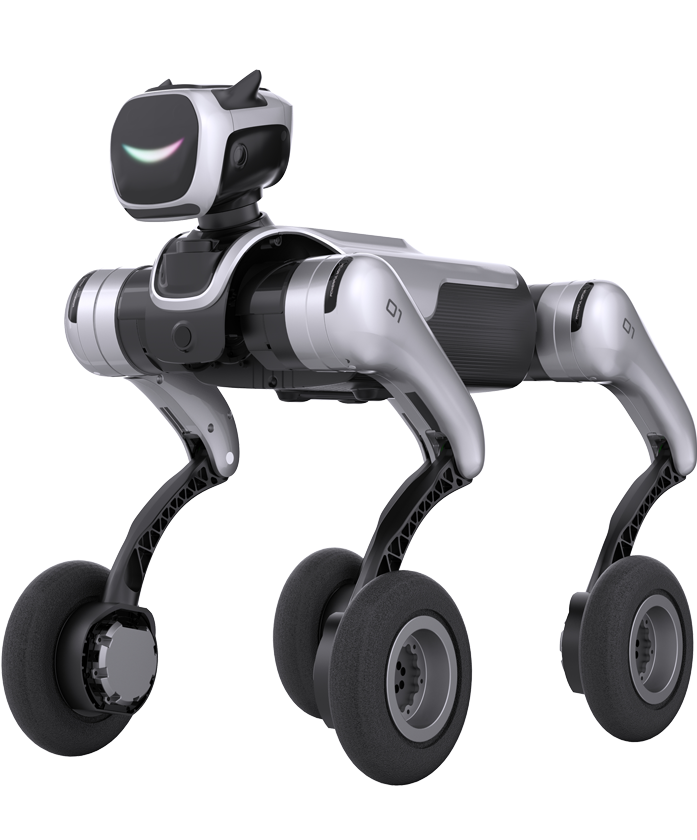
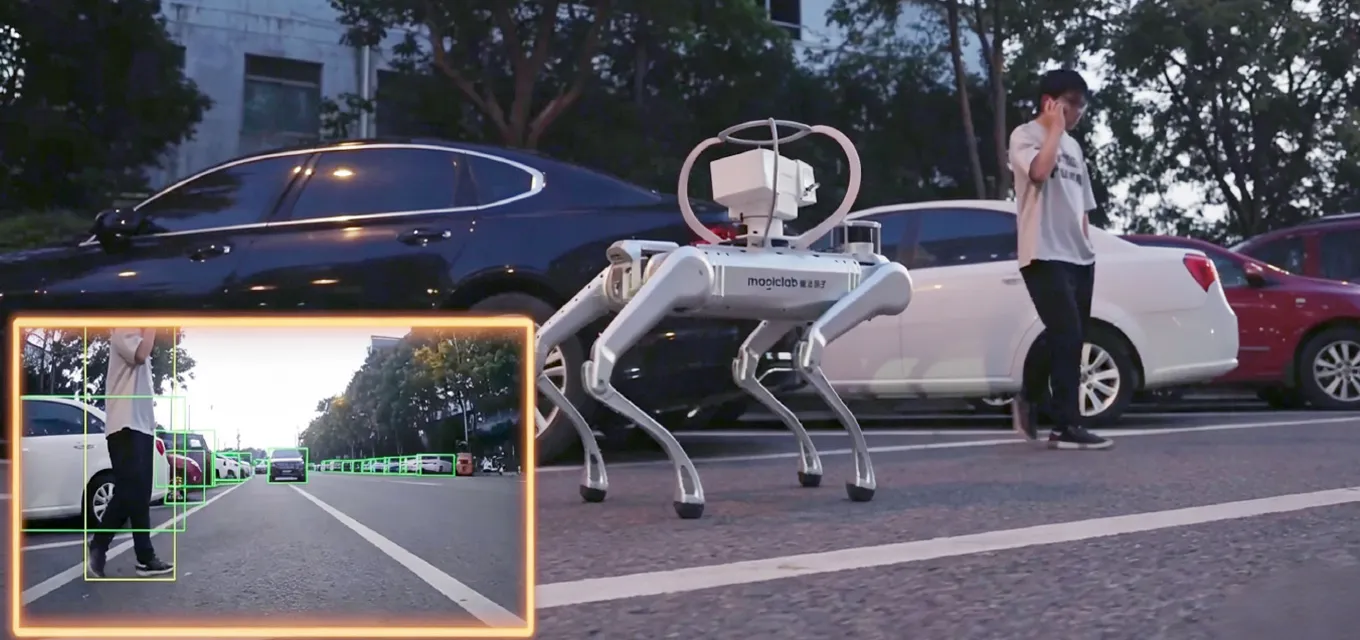
LiDAR, multiple cameras and ultrasonic sensors provide environmental information for tracking, obstacle response and intelligent mobile applications.
Seventeen motors coordinate head and body movement for expressive interaction, bidirectional travel and stable dynamic maneuvers.
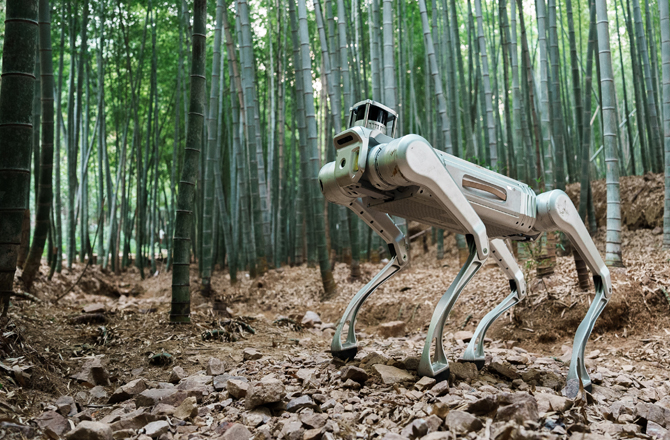
Pneumatic wheels improve travel efficiency on smooth surfaces, while articulated legs retain stepping, obstacle-crossing and adaptive posture capabilities.
A universal mounting platform supports additional LiDAR, gimbals, computing modules and other peripherals for customized projects.
Coordinated wheel and joint control enables crouching, lifting, handstands and terrain-adaptive body-height adjustment.
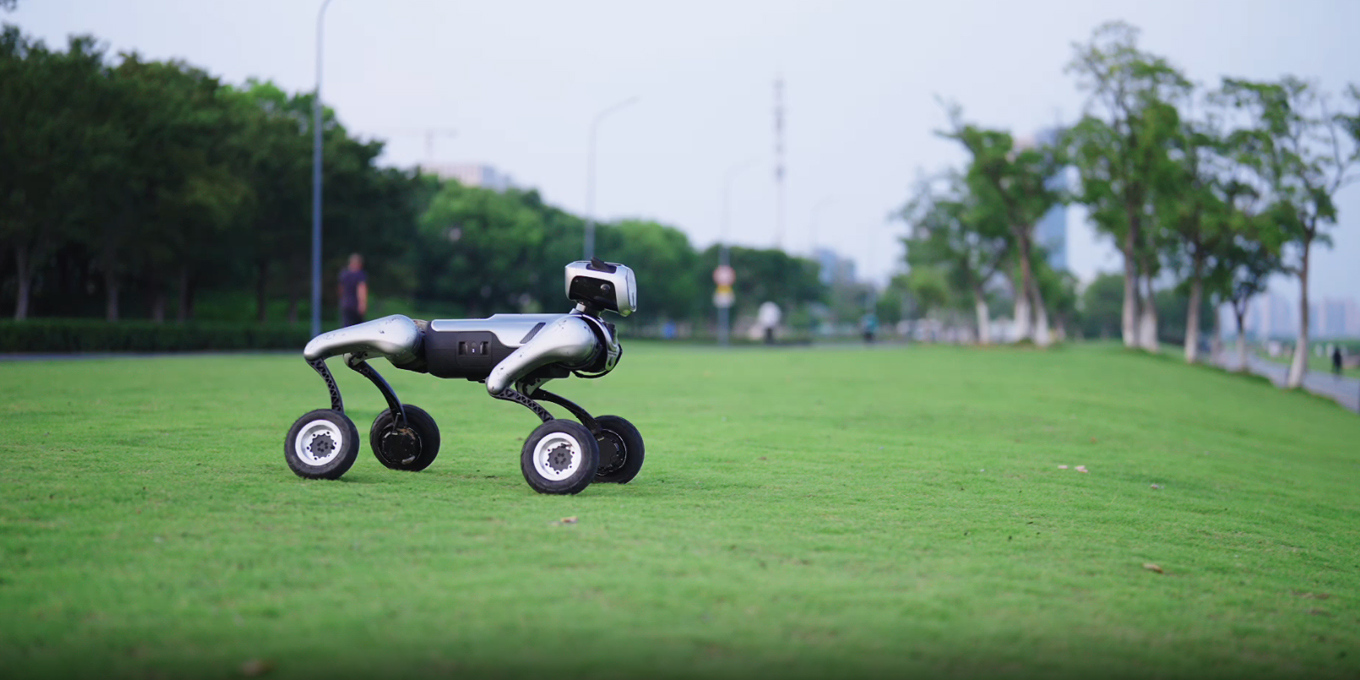
MagicDog-W supports wireless control through Wi-Fi 5, 4G and Bluetooth 5.0, together with OTA upgrades and expandable computing hardware. Development teams can use MagicDog-related SDK resources to access motion control, sensor information and robot status, while ROS2 interfaces support navigation-oriented application development. The universal backplate and expansion module provide a practical foundation for integrating perception devices, gimbals and project-specific payloads.



 English