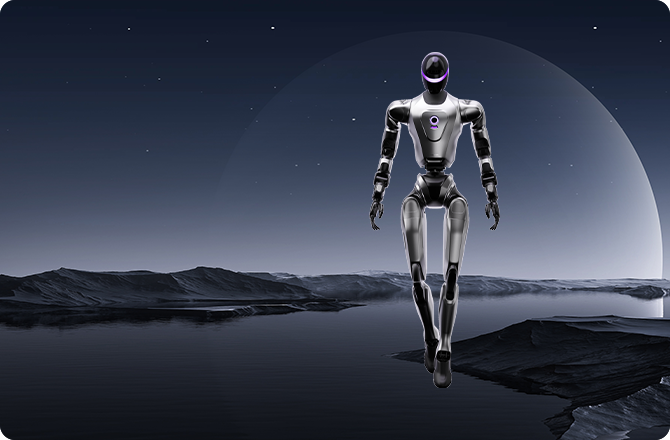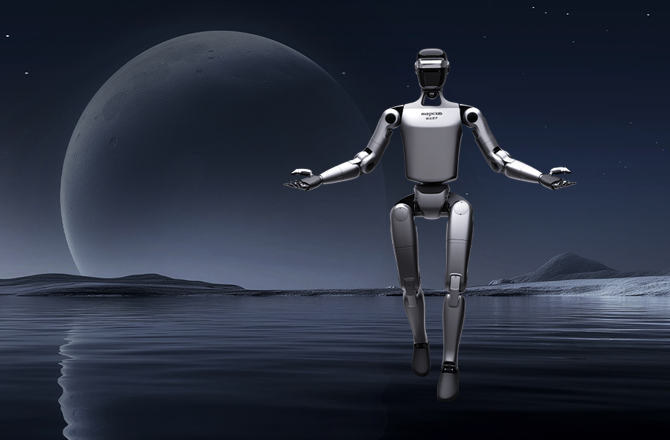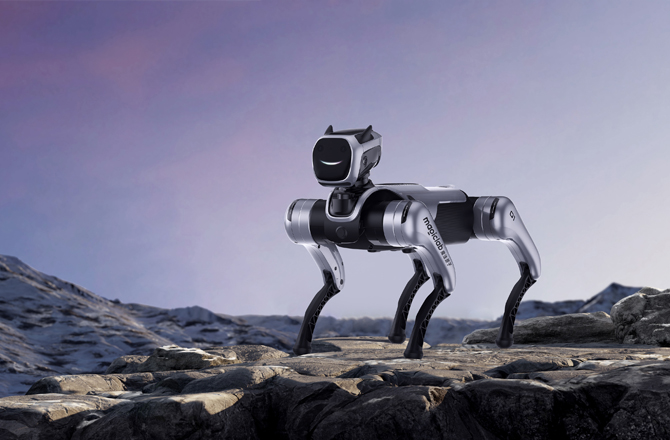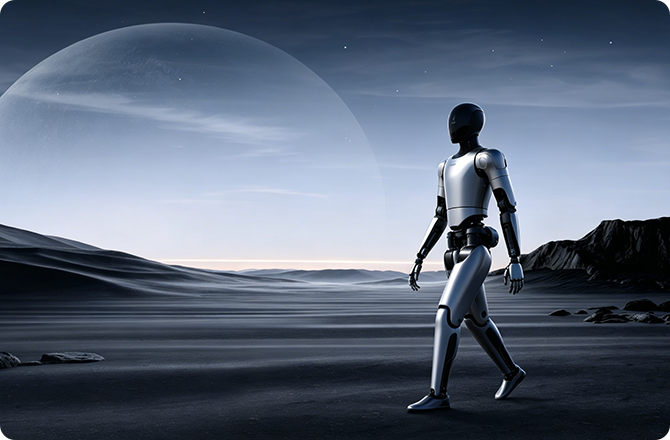

The purpose of humanoid robots is no longer limited to imitating human appearance or movement. As embodied AI develops, humanoid robots are increasingly designed to perform physical tasks in environments originally built for people, including factories, healthcare facilities, research laboratories, and service spaces.
This shift is also reflected in the market. According to the International Federation of Robotics (IFR), around 7,000 humanoid robots were sold globally in 2025 for industrial and professional service applications. While this remains small compared with conventional industrial robots, it shows that humanoid systems are moving from laboratory research toward practical deployment.
The primary purpose of humanoid robots is to provide flexible physical automation for tasks that require mobility, perception, manipulation, and interaction in human-oriented environments.
Unlike fixed automation equipment, humanoid robots can potentially move between workstations and handle different tasks without requiring an environment to be completely redesigned. This makes them relevant to applications where production processes change frequently or where conventional automation is difficult to deploy.
The broader development of the use of AI in robotics is also important because AI allows robots to interpret their surroundings and adapt their actions rather than simply repeat fixed programmed movements.
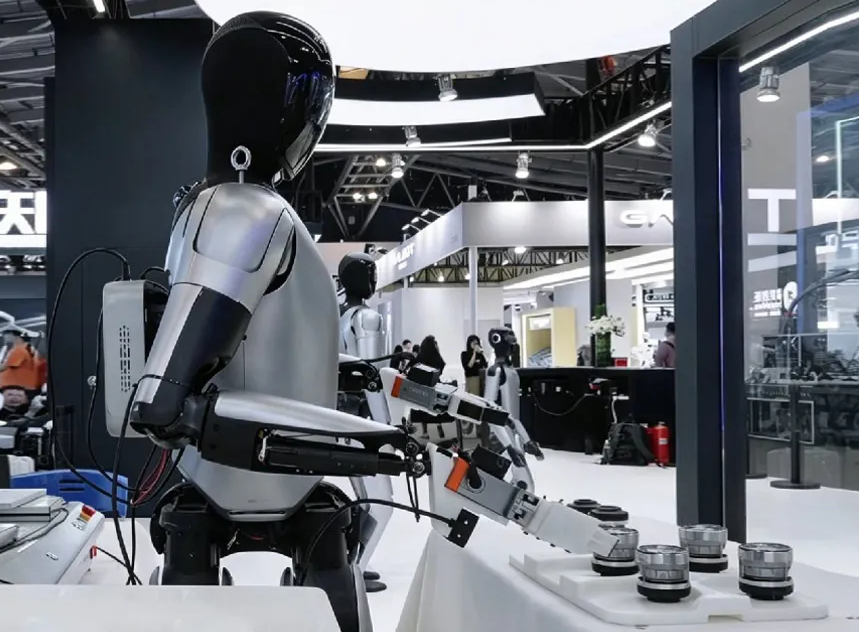
Humanoid robots are being explored in manufacturing, logistics, healthcare, research, education, hospitality, and other environments where human-like mobility and manipulation can provide practical advantages.
Manufacturing is one of the clearest examples. MagicLab has deployed MagicBot Gen1 in production-line scenarios involving loading and unloading, inspection, material handling, and packaging. In these environments, the robot application in manufacturing is not simply about replacing an existing machine. The objective is to introduce a more flexible physical automation layer that can operate alongside existing equipment and human workers.
MagicLab has also demonstrated humanoid robots in precision-oriented tasks. At the 2025 World Robot Contest, Gen1 demonstrated dual-handed dispensing, operating continuously for more than four hours while performing repeated dispensing actions.
Healthcare presents a different application model. Humanoid and companion robots can support reception, information delivery, interaction, education, and research into human-robot interaction. A 2026 UC Davis study examined the long-term use of a humanoid companion robot in dementia and memory-care settings, focusing on interaction with residents, staff experiences, engagement, and loneliness.
These examples demonstrate that humanoid robots are not tied to one industry. Their applications depend largely on whether the target environment contains tasks that benefit from mobile manipulation, perception, communication, or flexible interaction.
The humanoid form matters because many workplaces, buildings, tools, and workflows are already designed around human dimensions and movements.
| Factor | Conventional fixed automation | Humanoid robot |
|---|---|---|
| Environment | Often requires dedicated infrastructure | Can operate in human-oriented spaces |
| Mobility | Usually limited to defined areas | Designed for mobile operation |
| Task flexibility | Strong for repetitive tasks | Potentially better for changing tasks |
| Manipulation | Usually task-specific | Designed for general-purpose manipulation |
| Deployment model | Often integrated into a fixed production line | Can potentially work across multiple areas |
This does not mean humanoid robots automatically outperform conventional automation. Fixed industrial robots can remain highly effective for repetitive, high-speed, precisely controlled operations. The value of humanoids becomes more relevant when companies need flexibility across multiple tasks or want to automate processes without fundamentally rebuilding the working environment.
NIST's recent smart manufacturing work also highlights robotics, autonomous systems, sensing, perception, and AI as important elements of future manufacturing systems. Human-robot interaction and reliable operation therefore become important considerations alongside mechanical capability.
Businesses should evaluate humanoid robots according to the task they need to automate rather than starting with the robot itself.
The first question is whether the task requires mobility, manipulation, perception, or interaction. Companies should then consider payload, cycle time, working environment, safety requirements, integration requirements, and the level of human collaboration involved.
For manufacturing applications, the purpose of humanoid robots is strongest where tasks are difficult to automate with fixed equipment because of frequent product changes, variable workstations, or the need to handle objects in human-designed environments.
For healthcare and service applications, evaluation should additionally consider communication, navigation, human-robot interaction, privacy, and operational reliability.
MagicLab's development across manufacturing, healthcare, research, education, service, and other verticals reflects this scenario-based approach. Instead of treating humanoids as a single-purpose machine category, the company positions embodied AI as a platform for applying physical intelligence to different environments.
The purpose of humanoid robots is best understood as flexible physical automation in environments designed for humans. Their value comes from combining mobility, perception, manipulation, AI, and interaction within one robotic platform.
Current deployments already demonstrate applications in manufacturing, inspection, material handling, packaging, healthcare research, and service scenarios. However, humanoids are not a universal replacement for conventional automation. Their practical value depends on task complexity, flexibility requirements, integration conditions, safety, and operating economics. For businesses evaluating this technology, the key question is therefore not whether humanoid robots are impressive, but where their physical intelligence can solve a specific automation problem more effectively.
The main purpose is to perform physical tasks in human-oriented environments using a combination of mobility, perception, manipulation, and AI.
They can potentially handle tasks across different workstations and adapt to changing production environments without requiring every workspace to be redesigned around a dedicated machine.
AI helps robots perceive their surroundings, interpret information, plan actions, and interact with people or objects.
Not necessarily. Conventional industrial robots remain highly effective for many repetitive and precisely controlled tasks. Humanoids are being developed for applications where flexibility and mobility are particularly important.
Yes. Current research and deployments are exploring reception, education, interaction, companionship, navigation, and healthcare-related research applications.
Companies should evaluate the target task, payload, cycle time, environment, safety, human interaction, integration requirements, reliability, and overall operating economics.

 English