
If you are researching how much is a humanoid robot, the first thing to understand is that there is no single market price. A research platform, a general-purpose humanoid, and a robot prepared for factory deployment can have very different costs because their actuators, sensors, computing systems, hands, software, and integration requirements are different.
Price is also closely related to market maturity. The International Federation of Robotics (IFR) notes that humanoids are still produced in relatively small numbers, meaning the industry has not yet reached the manufacturing scale that could significantly reduce unit costs through economies of scale.
The price depends on the robot's configuration, intended application, and level of deployment. Buyers should therefore compare capabilities rather than relying on a single headline quotation.
| Robot type | Typical use | Main cost factors |
|---|---|---|
| Research platform | Education and algorithm development | Computing, sensors and software |
| General-purpose humanoid | Research and commercial tasks | Actuators, vision, AI and hands |
| Industrial humanoid | Manufacturing and logistics | Payload, durability and integration |
| Customized system | Specific workflows | Hardware, software and deployment |
Several components can substantially influence the final investment:
Mechanical system: Actuators, joint performance, degrees of freedom and structural materials affect both hardware complexity and durability.
Perception and computing: Cameras, LiDAR, onboard processors and AI computing determine how well the robot can perceive and respond to its environment.
Manipulation: Dexterous hands and force-control capabilities become important for robots handling different objects.
Software and AI: Navigation, perception, motion planning, task learning and interaction systems can require significant development and computing resources.
Deployment: Integration, training, safety testing, maintenance and technical support add to the project cost.
AI capability is becoming particularly important. In its 2026 position paper, IFR describes AI as enabling robots to improve adaptability, perception, efficiency, and interaction across manufacturing, logistics and service applications.
This helps explain why two humanoid robots with similar body designs can have very different prices.
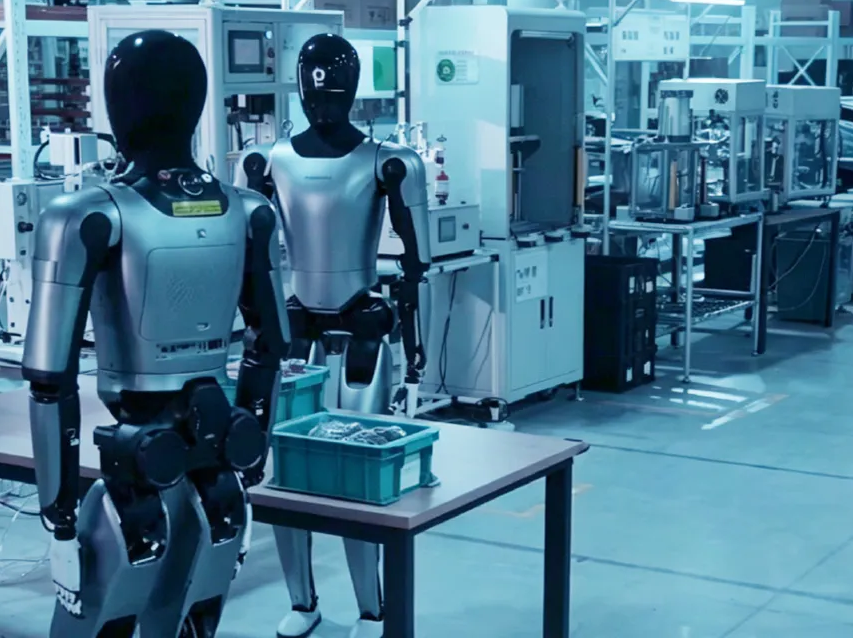
A humanoid robot factory project can require considerably more investment than purchasing a robot for research or demonstration because the system must work within an existing production environment.
NIST points out that integrating robots into existing facilities can be difficult and expensive because robots need to communicate with equipment, sensors, perception systems, mobility platforms, and manipulation technologies.
MagicLab provides practical examples of this type of deployment. MagicBot Gen1 has been used for loading and unloading, inspection, material handling, and packaging on production lines. At the 2025 World Robot Contest, Gen1 also demonstrated dual-handed dispensing, continuously operating for more than four hours while repeating dispensing actions on two motors every 20 seconds.
These cases show why factory buyers should evaluate more than the robot's purchase price. Cycle time, task coverage, uptime, integration requirements, and maintenance can all affect the actual cost of deployment.
The cost of humanoid robots in healthcare depends heavily on the role the robot is expected to perform. Reception, health education, navigation, companionship, and research require different capabilities and operating conditions.
A useful real-world example comes from UC Davis. In May 2026, researchers launched a long-term study examining how the humanoid companion robot Abi interacts with residents and staff in a memory-care environment. The study focuses on practical questions around social connection, well-being, and daily care rather than simply demonstrating the robot's hardware.
MagicLab is also developing healthcare-oriented applications involving navigation, reception, health education, and interaction. This shows why healthcare pricing should be considered together with the service being delivered, expected operating hours, interaction requirements, and deployment environment.
The most useful comparison is total deployment value rather than the initial quotation alone.
Buyers should consider:
Target tasks and workload
Payload and manipulation capability
Operating time and charging
Sensors and onboard computing
Software and AI capabilities
Integration requirements
Safety and maintenance
Technical support and scalability
For organizations exploring human robot interaction research, these considerations are particularly important because human-facing deployments require attention to interaction quality, task reliability, and system behavior as well as mechanical performance.
A research or education project may prioritize development flexibility and software access, while a factory customer may place greater weight on uptime, integration, and repeatability. The same humanoid platform can therefore have very different economic value depending on the application.
So, how much is a humanoid robot? There is no universal answer. Cost depends on mechanical design, sensing, AI computing, manipulation, software, integration, and deployment requirements. The current market is also still developing, with humanoids produced at relatively small scale compared with mature industrial robot categories.
Real manufacturing and healthcare cases show why buyers should evaluate the complete application rather than the hardware quotation alone. For businesses, the most useful comparison is whether the robot can perform the target tasks reliably, integrate into the existing environment, and create measurable value over its operating lifecycle.
There is no reliable universal average because humanoid robots differ significantly in configuration, capability, and application.
Advanced actuators, sensors, AI computing, dexterous hands, software, batteries, and integration can all contribute to the total cost.
It can because factory deployment may require integration, safety systems, maintenance, training, and higher reliability.
There is no standard healthcare price. Cost depends on the robot's role, operating environment, interaction requirements, and deployment model.
Not necessarily. Software, customization, integration, training, and support may be included or priced separately depending on the project.
Task capability, reliability, operating cost, integration requirements, safety, maintenance, scalability, and expected operational value should all be considered.

 English