
On April 28 (PST), the inaugural Global Embodied Intelligence Summit (GEIS), initiated by Magiclab Robotics (MagicLab), successfully concluded in Silicon Valley. As the industry's first high-spec global conference in embodied AI, the summit adopted the theme "Connect," focusing on frontier technology releases, visionary dialogues, and global ecosystem linkages—systematically highlighting the influence of intelligent manufacturing on the global stage.
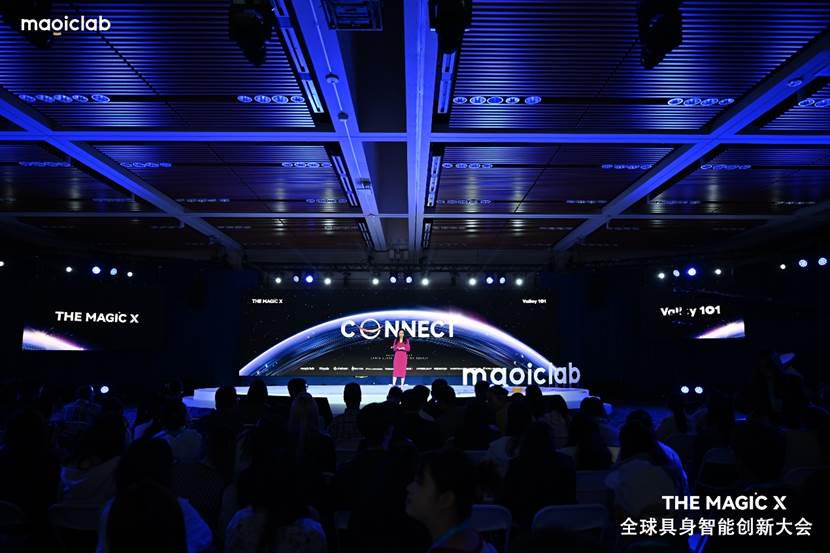

As one of the world's most dense tech innovation hubs, Silicon Valley serves as a critical bridge linking industrial capital, developer ecosystems, and real-world application scenarios. Hosting the inaugural GEIS in Silicon Valley marks a pivotal milestone in Magiclab Robotics' global strategic layout.
The summit gathered top international researchers, tech leaders, ecosystem partners, public officials, and investment institutions, drawing over a thousand AI scholars, developers, and investors worldwide. Attendees engaged in deep discussions regarding technology evolution, industry implementation, and ecosystem synergy for the next decade of embodied AI.
The event featured special guest Lay Zhang (Yixing Zhang)—actor, singer, and music producer—who joined dialogues on cutting-edge technology from the perspective of cultural heritage. Former San Francisco Mayor Willie Brown shared insights on how embodied AI is reshaping production and daily life. Turing Award winner and cryptography pioneer Martin Hellman delivered an opening keynote titled The Intersection of Safety, Intelligence, and the Physical World, analyzing safety and trust frameworks required for real-world robotic deployments.
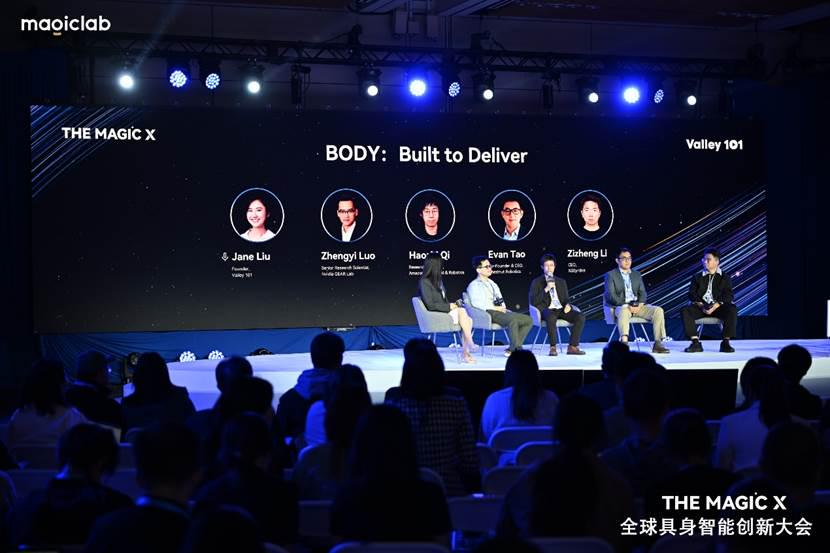
The summit featured two specialized tracks: "Embodied AI Hardware Evolution" and "Embodied AI Brain Revolution."
Hardware Evolution Track: Featuring experts such as Zhengyi Luo (Senior Research Scientist at NVIDIA GEAR Lab), Haozhi Qi (Scientist at Amazon Frontier AI & Robotics Institute), Evan Tao (Founder of Chestnut Robotics), and Zizheng Li (Founder of XGSynBot), discussions emphasized that systematic, full-stack hardware layouts are essential for moving robots out of laboratories into large-scale applications.
Brain Revolution Track: Magiclab Robotics President Shitao Gu, OpenMind Founder and Stanford Associate Professor Jan Liphardt, and Blue River Senior Software Engineer Junwu Zhang discussed world models, integrated perception-decision architectures, and complex environment adaptation. Speakers noted that iterative progress in the AI "brain" drives autonomous execution in real-world environments.
A central highlight of GEIS was the official launch of Magiclab Robotics' proprietary world model, Magic-Mix. While traditional VLA (Vision-Language-Action) models often struggle with generalization issues when faced with minor environmental variations, world models allow robots to truly comprehend physical laws and predict future changes to make common-sense decisions in complex environments.
The Magic-Mix World Model comprises two core engines:
Magic-Mix WAM: Responsible for physical environment understanding, spatial reasoning, and action decision-making.
Magic-Mix Creator: Serves as an offline data generation engine, synthesizing large-scale training samples to drive continuous model iterations.
Together, these engines establish a closed-loop pipeline: "Massive Data Generation → Model Training → Performance Feedback → Data Re-Generation." This dynamic framework allows robots to continuously learn and adjust across physical and simulated environments.
To address data bottlenecks in embodied AI, Magiclab Robotics built a massive training repository. According to Shitao Gu, Magiclab Robotics collects approximately 16,000 data entries daily, with high-quality data exceeding 1 million hours, expanded 10,000-fold through synthetic data generation.
For training mechanisms, Magic-Mix utilizes a video-action dual-expert collaborative training mode, introducing shared information gradient isolation, target image constraints, and failure image feature inputs. This solves common pain points such as long-horizon task error accumulation and physical common-sense deviation, granting robots millisecond-level responsiveness for complex tasks.
Alongside software breakthroughs, Magiclab Robotics unveiled next-generation hardware designed for dynamic physical environments:
MagicHand H01 Dexterous Hand: Engineered for precision operations, H01 features 20 Degrees of Freedom (DoF) to replicate human hand dexterity. Equipped with 44 high-resolution 3D tactile sensors, it captures subtle force changes during delicate operations. Featuring a 0-to-40mm dynamic perception range, H01 anticipates movements before touching objects, while its 5ms hardware closed-loop response system builds a safety boundary for human-robot collaboration in industrial and caregiving settings.
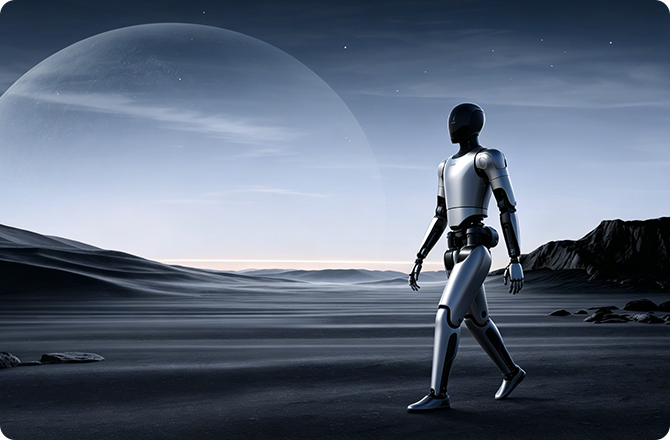
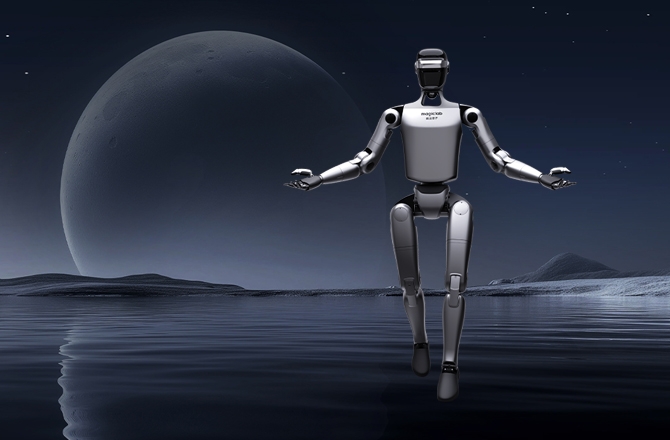
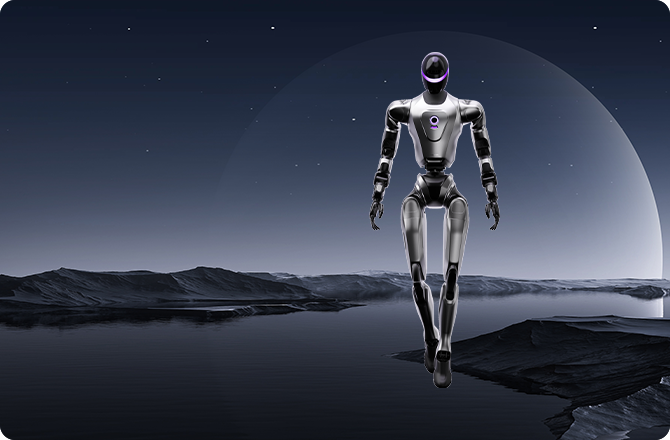
MagicBot X1 Flagship Humanoid Robot: Standing 180 cm tall and weighing 70 kg, X1 delivers a peak joint torque of 450 N·m with a 30% increase in overall motion speed. Featuring 31 active degrees of freedom, its motion range expanded by over 50%. Built for continuous operations, X1 incorporates an infinite-endurance dual-battery system supporting 24/7 non-stop performance. It is available in Standard Edition (ready-to-use commercial deployment) and Research Edition (supporting low-level secondary development for universities and labs).
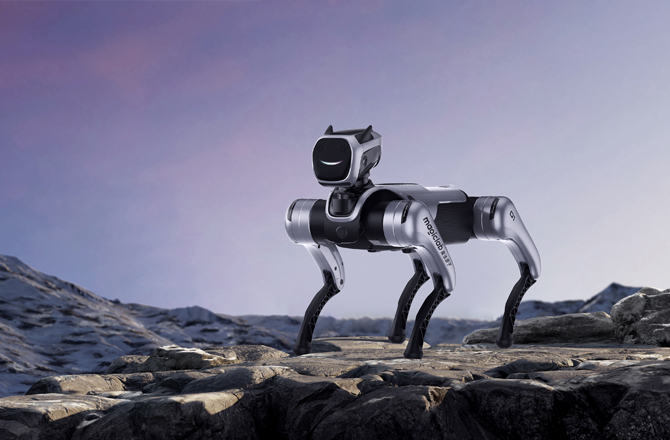
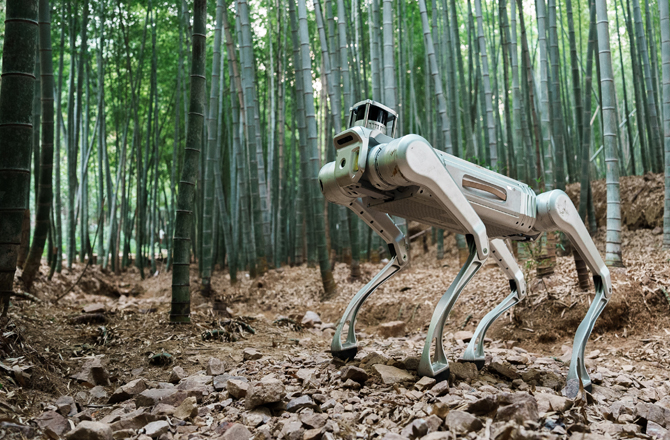
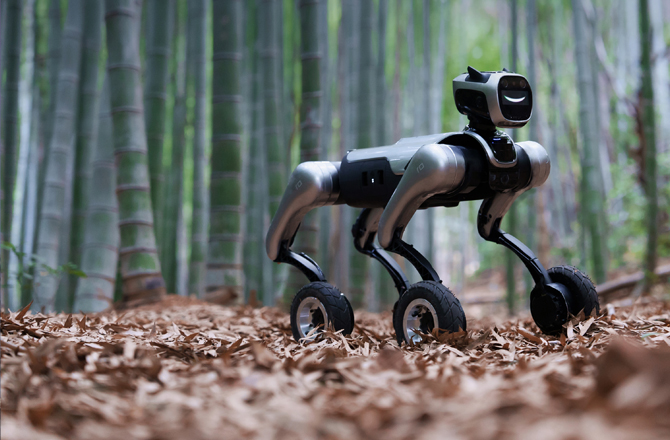
Magiclab Robotics now offers a full portfolio spanning humanoid and quadruped robotics, serving nine core domains: healthcare, flexible manufacturing, inspection and security, smart tour solutions, public safety, smart logistics, sports and entertainment, research and education, and smart living.
Since 2025, Magiclab Robotics has accelerated its international expansion, with operations covering over 50 countries and regions and overseas revenue accounting for over 60%. At GEIS, Shitao Gu publicly revealed the company's long-term revenue target: advancing toward a $14 billion revenue scale by 2036.
To support this growth, Magiclab Robotics announced a $1 billion investment over the next five years under its "1,000 Scenarios Co-Creation Initiative" to build a dedicated ecosystem for secondary development. During the event, Magiclab Robotics signed strategic partnership agreements with Silicon Valley AI partners including Openmind, PrismaX AI, Cosmicbrain AI, and Physis.
Under the initiative, Magiclab Robotics will open targeted development tasks and provide hardware prototypes, development funding, core tech stack access, project lead referrals, and marketing resources to global partners. By focusing on secondary development ecosystems, Magiclab Robotics aims to collaborate with international developers and industrial partners to drive embodied AI into real-world productivity worldwide.

 English