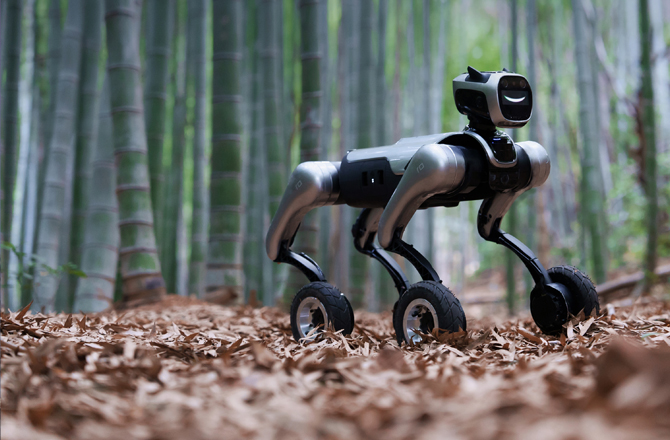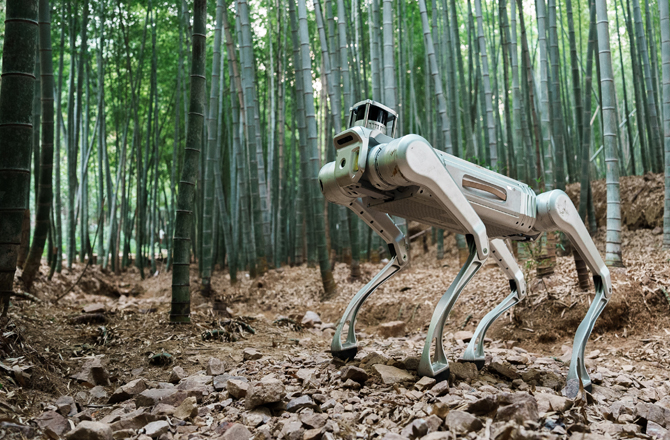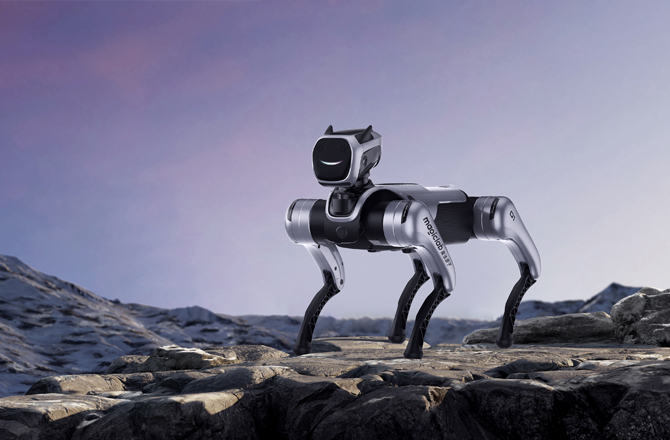

Targeting lightweight, distributed use cases in light-industrial and campus/park settings, MagicLab unveiled MagicDog T1 at WAIC 2026 — built to fill the gap between full industrial-grade platforms and tasks that don't justify that scale of deployment. T1 uses a lightweight, modular chassis that supports single-person rapid deployment and functional expansion, with support for mounted robotic arms, vision sensors, and industry-specific sensing equipment — combining autonomous inspection, anomaly detection, equipment monitoring, and light on-site manipulation in one platform, rather than requiring separate tools for each function.
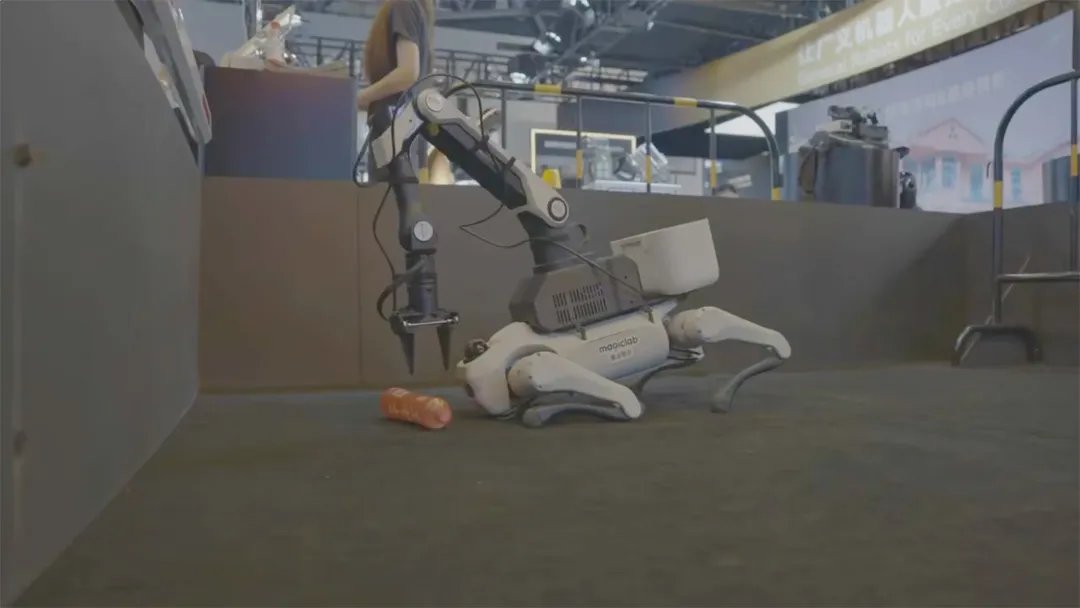
In its WAIC demo, T1 patrolled a fixed zone, identified empty plastic bottles, used a rear-mounted gripper arm to pick them up, and deposited them into an onboard collection basket — a simple task chosen specifically to show the full perceive-decide-manipulate loop end to end, not just locomotion.
Why it matters for facilities and park-management operators: Most inspection robots are priced and engineered for large industrial sites with dedicated IT and robotics staff. A single-person-deployable, modular platform opens up inspection and light manipulation to smaller sites — parks, campuses, light-industrial facilities — that couldn't previously justify a full robotics deployment.

 English