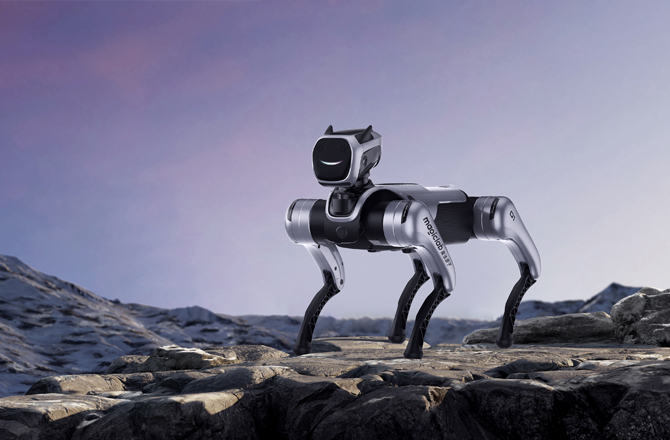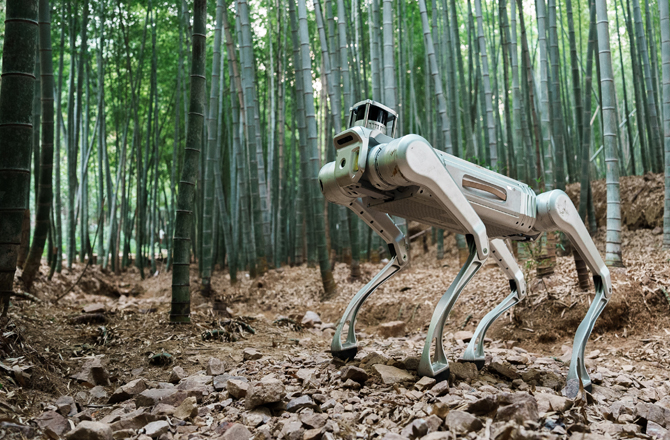

As one of the industry's leading embodied AI companies, MagicLab is committed to full-scenario deployment — proving that embodied intelligence isn't just impressive on a stage, but genuinely capable in unscripted, high-stakes real-world environments. The China Night event at the 79th Cannes Film Festival became one of the clearest tests of that thesis to date.
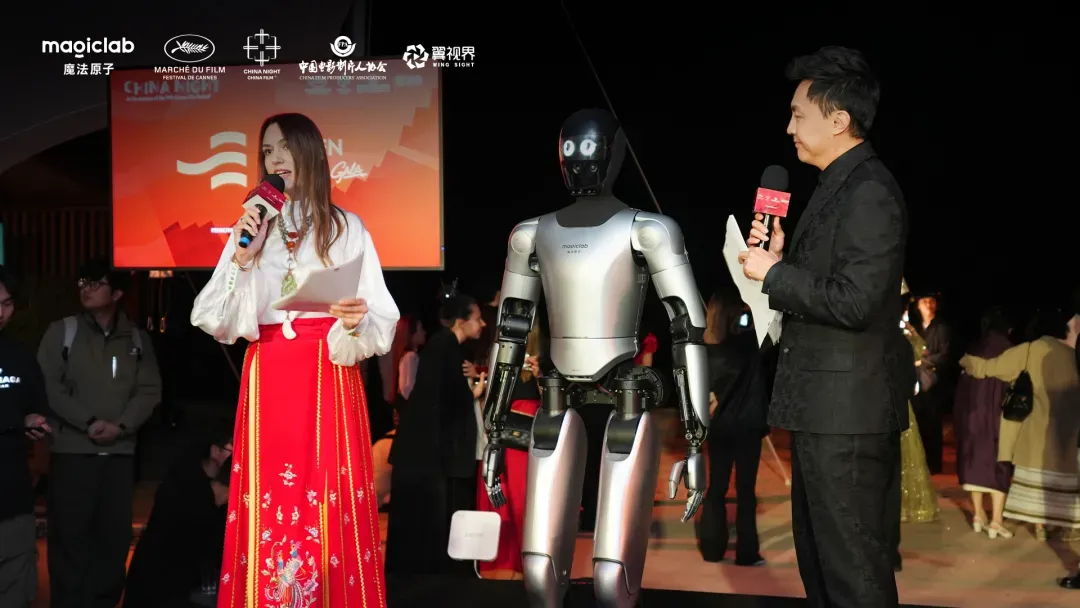
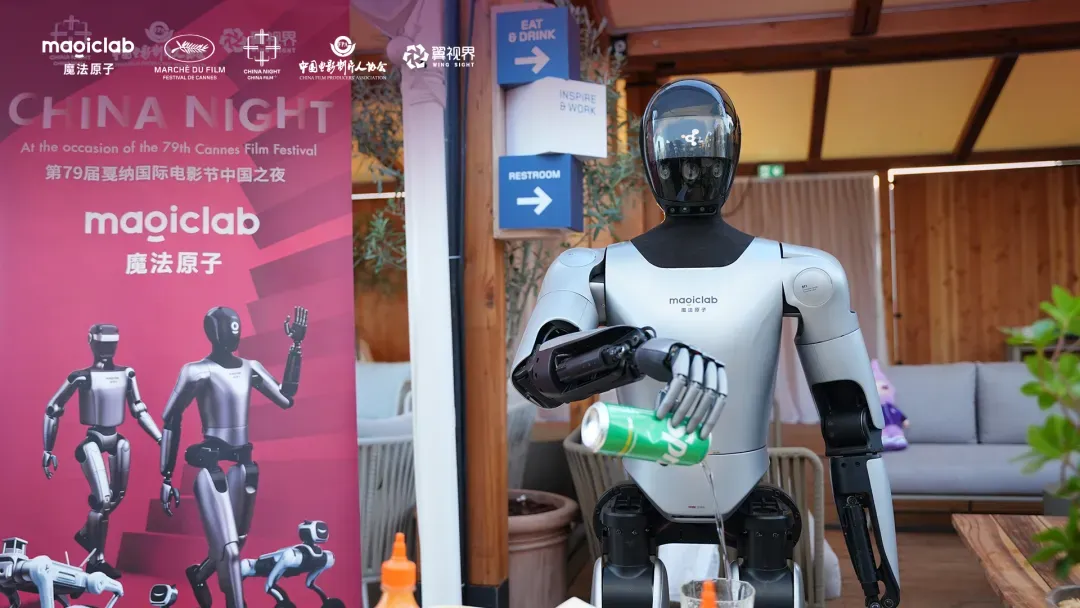
MagicLab's full robot family was woven directly into the event's live program — not staged as a side attraction, but running in parallel across red-carpet greeting, event hosting, guided tours of intangible cultural heritage, precision guest service, and stage performance. At the center of it, MagicBot Gen1 handled fine-motor service tasks live in front of international press and film-industry guests: pouring drinks and handing items to attendees with the same fluid precision a trained human server would use.
What looks effortless on camera is a genuinely difficult technical problem. Reliable drink-pouring and item-handoff in a crowded, unpredictable social environment requires environmental perception, hand-eye coordination, precision force control, and stable end-effector manipulation working together in real time — with zero room for the kind of clean, controlled lighting and fixed positioning a lab demo affords. For any humanoid robot, this is one of the clearest possible tests of readiness for commercial deployment: can it perform safely, naturally, and consistently when nothing about the environment is scripted?
Why it matters for event and hospitality decision-makers: Most robot demos are built for a stage — good lighting, a fixed mark, a rehearsed sequence. Cannes wasn't that. A robot performing fine-motor guest service inside a live, unscripted international event is the strongest available signal that a platform is ready for real hospitality, retail, and brand-activation deployments — not just trade-show spectacle.

 English