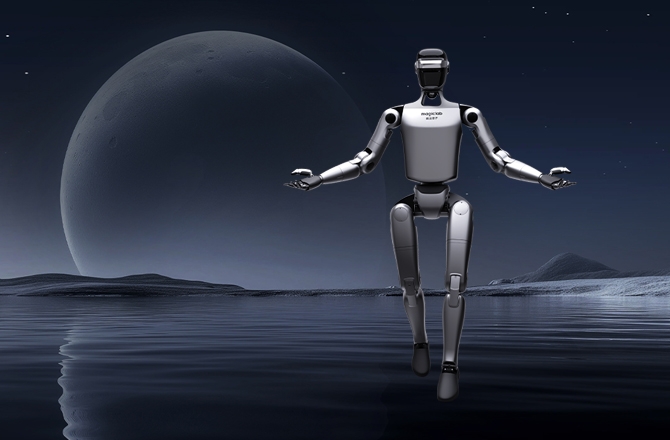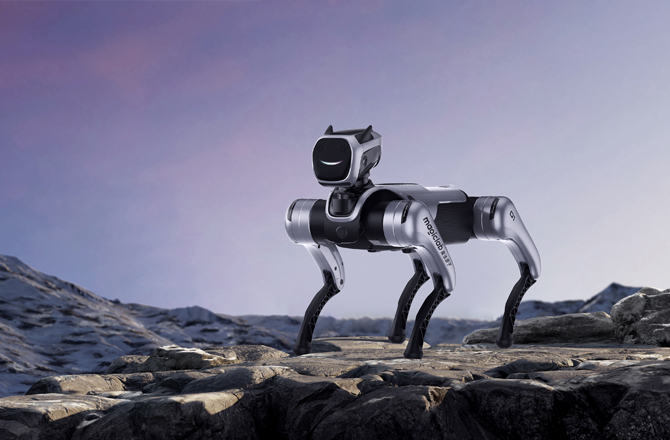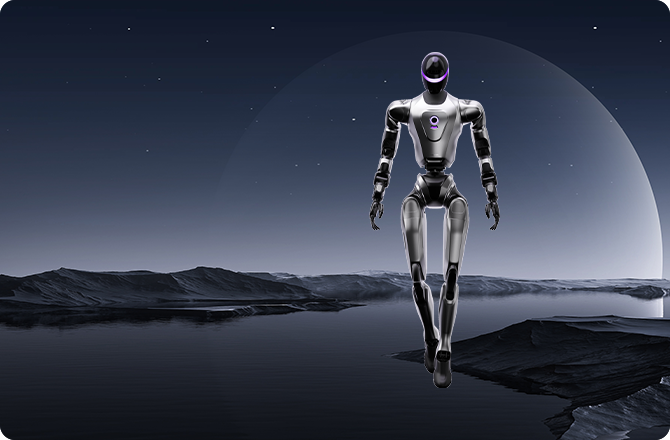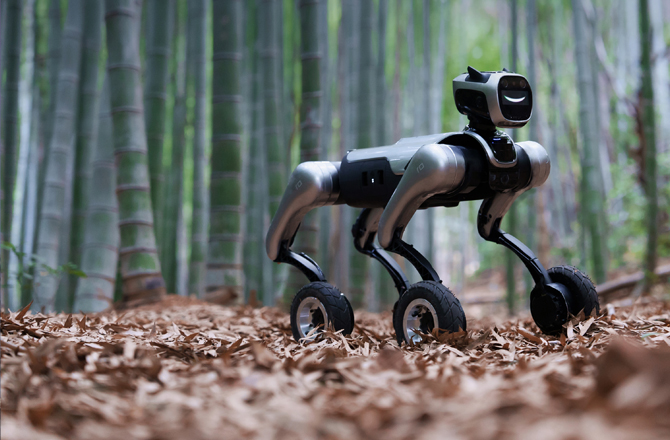

As one of the industry's leading embodied AI companies, MagicLab is committed to full-scenario deployment — building deep application capability across every product line so that embodied intelligence isn't just impressive, but genuinely useful in factories, businesses, and homes worldwide.
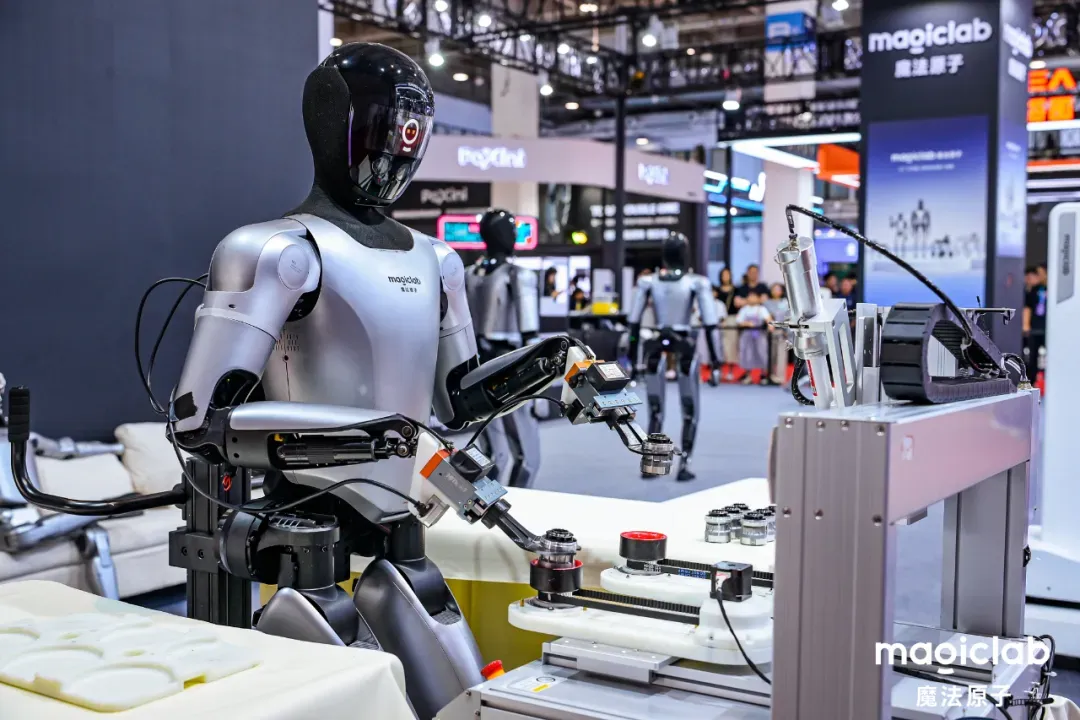
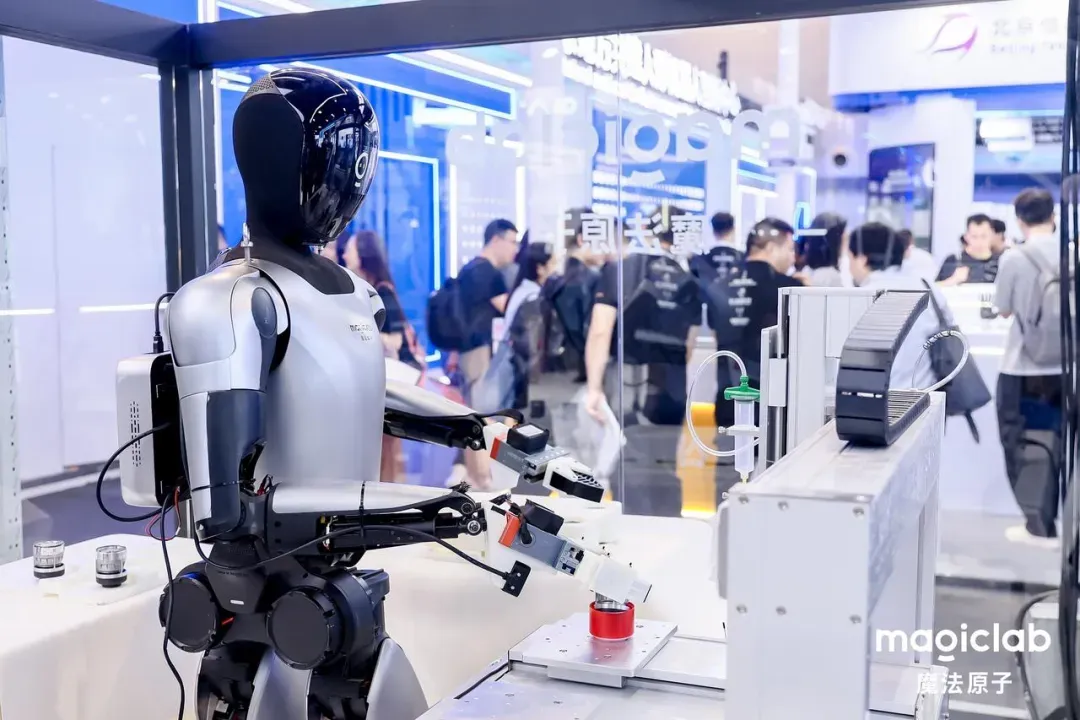
Industrial manufacturing is one of the earliest and most important scenarios MagicLab has targeted. At its exhibition debut, MagicLab gave the world its first live look at Gen-1 performing true two-handed manipulation on an industrial dispensing line — a task that has traditionally required either a fixed single-purpose machine or a skilled human operator. Working at the dispensing station, MagicBot ("Xiaomai") completes precision adhesive dispensing on two motor components simultaneously, both hands operating in parallel, once every 20 seconds — and it sustains this pace for more than 4 continuous hours without interruption.
This isn't a lab demo. The synchronized dual-arm dispensing routine is powered by reinforcement learning combined with imitation learning, running on top of a highly robust motion-control algorithm stack. The result: dispensing accuracy consistently held within 1–2 millimeters, cycle after cycle, hour after hour — the level of repeatable precision that flexible manufacturing lines actually require, not just what looks good on camera.
At WAIC 2025, one of the event's most-visited booths, MagicLab went a step further than a product reveal: it brought a live, working simulation of an industrial floor on-site. Visitors watched Gen-1 move seamlessly between "transport" and "dispensing" tasks in a mixed, dynamic environment — demonstrating stable performance even under the kind of unpredictable interference and workload switching that real factories throw at any automation system.
Why it matters for manufacturers: Precision dispensing has historically forced a choice between rigid, single-task machines that can't adapt to product changeovers, and manual labor that's expensive, inconsistent, and increasingly hard to staff. A humanoid that holds sub-2mm accuracy across a 4+ hour shift — with two arms working independently — closes that gap without requiring a dedicated fixture for every SKU.

 English